

Description
Natural Iridescent Ammonite Fossil from Madagascar
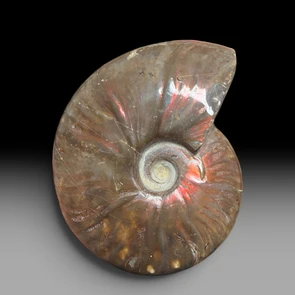
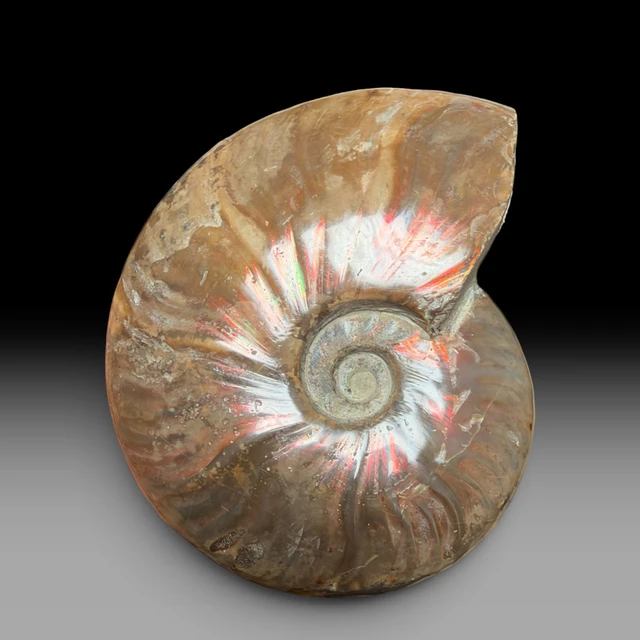
Discover the extraordinary beauty of this Natural Iridescent Ammonite Fossil from Madagascar, a remarkable prehistoric marine specimen dating back millions of years to the Cretaceous Period.
These beautiful ammonite fossils are distinguished by their characteristic spiral shells and captivating natural iridescence, which may display brilliant shades of red, orange, gold, green, blue, and violet depending on the individual specimen and the angle of illumination.
Combining prehistoric history with remarkable natural beauty, iridescent ammonites are particularly desirable among fossil collectors, gemstone enthusiasts, and natural history collectors.
Ammonites – Ancient Inhabitants of Prehistoric Oceans
Ammonites were an extinct group of marine cephalopods belonging to the subclass Ammonoidea. They were related to modern squid, octopuses, cuttlefish, and nautiluses.
These fascinating marine creatures inhabited Earth's oceans for hundreds of millions of years before becoming extinct approximately 66 million years ago, during the mass extinction event that also eliminated the non-avian dinosaurs.
Ammonites possessed distinctive external shells divided into internal chambers. The animal occupied the largest and most recently formed chamber, while the remaining chambers helped regulate buoyancy.
Their remarkable spiral shells and diverse patterns make ammonites among the most recognizable and collectible fossils in the world.
What Causes the Beautiful Iridescent Colors?
The spectacular rainbow-like coloration displayed by iridescent ammonites is associated with the preservation of the shell's original nacreous microstructure.
Nacre, commonly known as mother-of-pearl, consists primarily of microscopic layers of aragonite, a crystalline form of calcium carbonate.
When light interacts with these thin mineral layers, optical interference produces shimmering colors that can change depending on the viewing angle.
Depending on the preservation and structure of the fossilized shell, iridescent ammonites may exhibit a variety of colors, including:
-
Brilliant red and orange
-
Metallic gold and yellow
-
Vibrant emerald green
-
Iridescent blue
-
Subtle purple and violet
-
Pearlescent and multicolored reflections
This remarkable natural optical phenomenon gives each specimen its own distinctive appearance.
Iridescent Ammonites from Madagascar
Madagascar is internationally recognized for its exceptional ammonite fossils, particularly specimens recovered from marine sedimentary deposits dating to the Cretaceous Period.
Millions of years ago, portions of present-day Madagascar were covered by ancient seas inhabited by a diverse range of marine organisms, including ammonites.
Following their deaths, some ammonite shells became buried beneath marine sediments. Over millions of years, geological processes preserved these shells as fossils.
Under favorable preservation conditions, portions of the original nacreous shell structure survived, producing the remarkable iridescent coloration seen in these specimens today.
Madagascar ammonites are highly appreciated for their attractive spiral shapes, geological significance, and beautiful natural coloration.
A Remarkable Natural Display Specimen
The combination of distinctive spiral geometry and shimmering iridescent colors makes these ammonites particularly attractive display specimens.
Their appearance can change dramatically when viewed under different lighting conditions, revealing colorful reflections across the fossilized shell.
These fascinating fossils are ideal for:
-
Fossil and mineral collections
-
Natural history displays
-
Home and office décor
-
Educational geology collections
-
Museum-style exhibits
-
Ammonite and cephalopod collections
-
Unique gifts for fossil enthusiasts
Each ammonite is a naturally unique specimen, with individual variations in size, coloration, shell preservation, surface texture, and intensity of iridescence.
Caring for Your Iridescent Ammonite
The preserved iridescent shell layer can be delicate and should be handled with care.
Avoid prolonged exposure to moisture, harsh cleaning chemicals, abrasive materials, and extreme temperature changes. Clean gently using a soft, dry cloth or brush.
Displaying the specimen under directional lighting can help reveal its beautiful natural iridescence.
Product Features
-
Fossil Type: Natural Iridescent Ammonite
-
Classification: Ammonoidea
-
Animal Group: Marine Cephalopod
-
Geological Period: Cretaceous
-
Geological Age: Approximately 66–145 million years, depending on the fossil-bearing deposit
-
Origin: Malanga, Madagascar
-
Ancient Habitat: Marine Environment
-
Shell Composition: Originally Aragonite (Calcium Carbonate)
-
Optical Property: Natural Iridescence
-
Color: Variable rainbow and pearlescent reflections
-
Specimen condition & details: This specimen is in great condition with no repair and/or restoration. It features great color and detail.
-
Size: 4.5" L x 3.75" W
-
Ideal For: Fossil collectors, natural history displays, decorative specimens, and gifts
-
You will receive : The Actual specimen pictured
Add the spectacular beauty of a Natural Iridescent Ammonite Fossil from Madagascar to your collection and own a remarkable piece of Earth's prehistoric marine history.