

Description
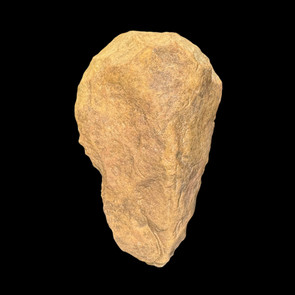
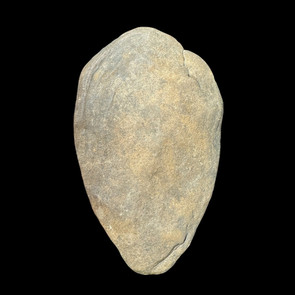
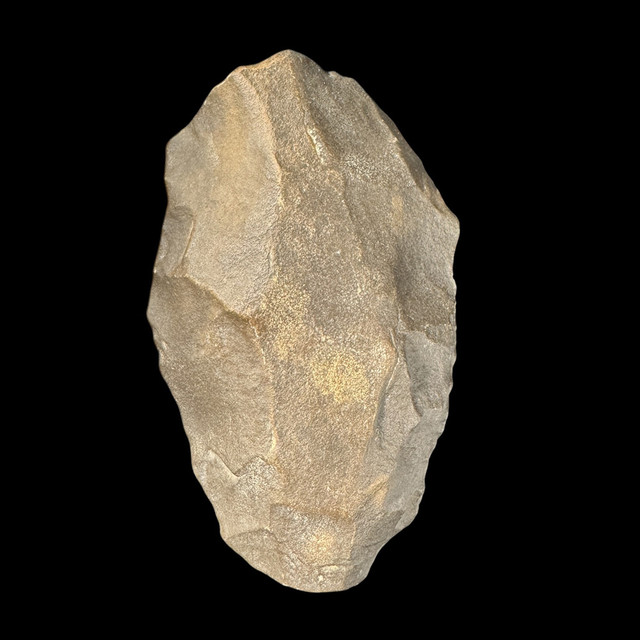
Acheulean Handaxe — Lower Paleolithic Stone Tool, Algeria
This genuine Acheulean handaxe from Algeria is one of the oldest and most iconic tools in human history — a tangible connection to our earliest ancestors. Handaxes are characteristic of the Lower Acheulean and Middle Paleolithic periods, spanning roughly 1.6 million years ago to about 100,000 years ago, and were used by Homo erectus and other early humans.
In North Africa, handaxes have been dated at Oued Boucherit in Algeria to 1.7 million years ago — making Algeria one of the most significant Acheulean sites on the planet. The Algerian site of Ternifine has also yielded remarkable Acheulean assemblages, dated to approximately 700,000 years ago.
The World's Longest-Used Tool
Acheulean handaxes are among the most widely distributed and longest-lasting archaeological artifacts ever recovered, with examples found across North, South, and East Africa, Europe, and Western, South, and East Asia. Some researchers describe the handaxe as the "Acheulean Swiss Army knife" — a multi-functional tool used for cutting, butchery, woodworking, and possibly even as a thrown hunting weapon.
Craftsmanship Across Deep Time
The primary innovation of the Acheulean handaxe was that the stone was worked symmetrically on both sides — a bifacial technique requiring the toolmaker to think several steps ahead, removing flakes alternately from each face in a clear sequence. Over countless millennia in the Saharan environment, the surface of these tools acquires a rich desert patina — subtle and mineralised, shaped by the abrasive action of sand and time.
Some researchers have suggested that Acheulean handaxes became social artifacts — objects that embodied something beyond their function, with more elaborate examples possibly playing a role in their owners' identity and social interactions. They may represent the earliest known instance of intentional aesthetic design in human history.
Dimensions: 7" L x 4.25" W
Provenance: Sahara desert, Morocco
Age: Acheulean 500,000-1,000,000 YA
Type: Actual specimen-one only